
Migration in Somalia: People on the Move
Somalia has long been a country in motion. Its people move within its borders, across to neighbouring countries, and along major international migration routes, driven by a mix of necessity, aspiration, and circumstance. Understanding migration in Somalia means listening to two voices at once: the migrant seeking safety or opportunity, and the communities and institutions that receive, support, or manage their movement.
A Developing Migration Policy Framework
Somalia has taken meaningful steps toward building a migration governance framework. The country is part of the international refugee frameworks which includes the 1951 Refugee convention and its 1967 protocol, as well as the 1969 OAU Refugee convention. Within its borders the government has passed the refugees and asylum seekers law (No.103/2023) and established a national coordination Mechanism on migration in 2024 reflecting a growing commitment to managing migration more holistically. Other key instruments include the Somalia Immigration Law (No. 72/1995), the Somaliland Citizenship Law (No. 22/2002), and a National Action Plan to address statelessness. For a government operating largely from Mogadishu, developing and implementing these policies across a vast, fragmented territory is a genuine achievement even as gaps remain.
Internal Migration: Movement Within Borders
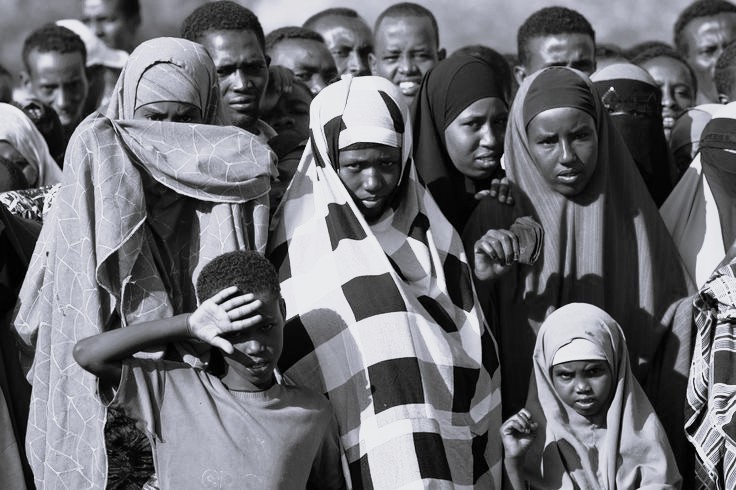
Internal migration in Somalia is shaped primarily by displacement. By the end of 2023, an estimated 5.9 million people were internally displaced (IDMC, 2024), many having fled conflict, drought, or flooding. Over the past 50 years, Somalia's urban population has grown from 25% to nearly 48% (worldbank, 2024) a profound demographic shift reflecting the pull of urban safety and opportunity, and the push of rural insecurity. For cities and towns receiving displaced people, this rapid urbanisation brings both social complexity and economic vitality. Host communities often absorb new arrivals with limited formal support, making local solidarity a cornerstone of Somalia's internal migration response. Recognising and resourcing these communities is as important as addressing the conditions that cause displacement.
International Migration: Somalia as Origin, Transit, and Destination
Somalia occupies all three positions in the international migration system. It is primarily known as a country of origin: an estimated 761,221 Somali refugees live abroad, mostly in Ethiopia, Kenya, Uganda, Yemen, and Djibouti (UNHCR, 2023). For those who have left, remittances sent home are a vital economic lifeline for families and communities.
Somalia also functions as a transit country. Many migrants predominantly from Ethiopia pass through on irregular routes toward the Gulf states and beyond. In 2024, over 283,000 cross-border movements were recorded, a 13% increase from the previous year (IOM, 2024). Transit hubs such as Bosasso and Hargeisa play a significant role in regional migration corridors linking the Horn of Africa to Yemen and further Abroad. Less recognised is Somalia's role as a destination country. In May 2024, approximately 18,699 refugees and 20,776 asylum seekers were living in Somalia mostly from Ethiopia (66%) and Yemen (29%) (UNHCR, 2024). The majority settle in urban and peri-urban areas in the relatively stable north, where host communities provide a quiet but essential layer of protection.
Two Perspectives, One Shared Challenge
For migrants and displaced people, the decision to move is rarely simple. It reflects a careful and often desperate weighing of risk, opportunity, and hope. Whether crossing into a neighbouring country or moving to a Somali city, migrants bring skills, resilience, and cultural richness to the places they reach. For host communities and governments, managing migration under conditions of limited resources and ongoing insecurity is an extraordinary undertaking. Somalia's northern regions, which host the majority of the country's refugee population, exemplify how communities can serve as partners in protection, even while managing their own challenges. Sustainable migration governance in Somalia will require investment in both groups: policies that protect and empower migrants, and resources that strengthen the communities welcoming them.
Read full atlas: https://sihma.org.za/african-migration-statistics/country/somalia
References
IDMC. (2024). Somalia. Retrieved from IDMC: https://www.internal-displacement.org/countries/somalia/
IOM. (2024). 2024 Yearly Eastern Route Report. Retrieved from IOM: https://dtm.iom.int/reports/2024-yearly-eastern-route-report
UNHCR. (1951). 1951 refugee convention 1967 protocol. Retrieved from UNHCR: https://www.unhcr.org/sites/default/files/2025-02/1951-refugee-convention-1967-protocol.pdf
UNHCR. (1969, September 10 ). OAU Convention Governing the Specific Aspects of Refugee Problems in Africa, adopted by the Assembly of Heads of State and Government at its Sixth Ordinary Session, Addis-Ababa, 10 September 1969. Retrieved from UNHCR: https://www.unhcr.org/media/oau-convention-governing-specific-aspects-refugee-problems-africa-adopted-assembly-heads
UNHCR. (2023, July 17). Somalia Refugee Crisis Explained. Retrieved from UNHCR: https://www.unrefugees.org/news/somalia-refugee-crisis-explained/
UNHCR. (2023). Somalia Refugees and Asylum Seekers Law. Retrieved from UNHCR: https://rimap.unhcr.org/node/62494
UNHCR. (2024, May 31). Somalia Situation: Population Dashboard - 31 May 2024. Retrieved from UNHCR: https://data.unhcr.org/en/documents/details/109447
worldbank. (2024). Urban population (% of total population) - Somalia, Fed. Rep. Retrieved from worldbank: https://data.worldbank.org/indicator/SP.URB.TOTL.IN.ZS?locations=SO
Categories:
Tags:
- Migration Corridors
- Hargeisa Migration Hub
- Bosasso Migration Route
- Irregular Migration
- Transit Migration
- Refugee Integration
- Host Communities
- Humanitarian Response
- Statelessness
- Somalia Immigration Law
- OAU Refugee Convention
- Refugee Convention
- IDPs In Somalia
- Migration Policy Framework
- Human Mobility
- Horn Of Africa Migration
- Cross-border Migration
- Somalia Refugee Policy
- Refugee Law
- Urbanisation In Somalia
- Forced Displacement
- Migration Governance
- Asylum Seekers
- Refugee Protection
- Somali Refugees
- Internal Displacement
- Migration In Somalia
- Somalia Migration