

Waiting for Years and Feeling Stuck
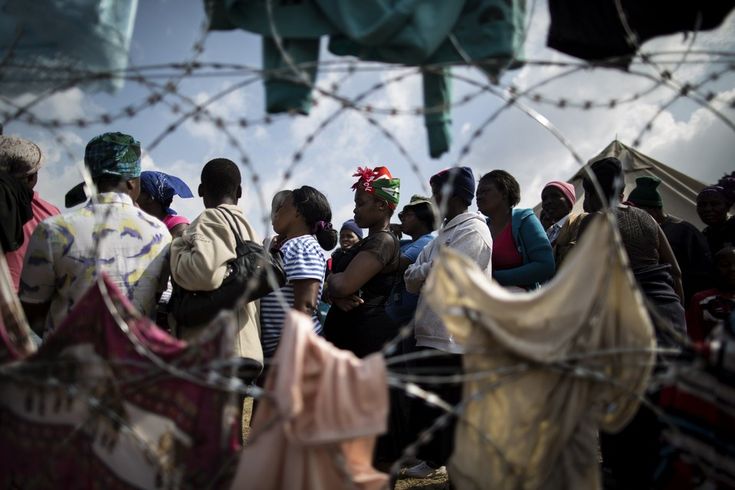
Obtaining official refugee and asylum documents in South Africa is a constant challenge for migrants. Imagine a queue forming outside the refugee reception office before the sun rises, with some people having travelled to the office for long hours and with others who have stood in different versions of this queue for years. And many are usually turned away and asked to come back another day.
This scene is the focus of a recent study by Pineteh E. Angu, published in the African Human Mobility Review (AHMR), based on interviews with asylum seekers, refugees, interpreters, and officials who assess asylum and refugee applications. The study’s main observation is that South Africa’s asylum system and time play a huge role in people’s lives, sometimes because the system is overwhelmed and sometimes, the delay itself ends up serving a purpose that officials themselves may not always intend.
"Waithood" and "Stuckness”
Waithood and stuckness are the terms used by researchers to depict this experience. When taken as a whole, they depict a suspended life that one researcher refers to as "permanent impermanence." Researchers illustrate the emotional texture of waithood as 'an arid stretch of time, where the clock ticks, but no movement happens'. With some people living in the country for fifteen or twenty years, raise children, and still be legally unsettled not because they were rejected or accepted, but simply because they are waiting for a verdict on their status and reception centres that are only available one day a week, abruptly shorten people’s permits from four years to six months, or a family whose South African-born children were required to resume their case files at the age of eight. These are just a few examples of what applicants say.
Some of this probably reflects capacity constraints rather than intent for authorities operating inside a congested system. However, the study also highlights a harsher reality: even in situations where it is never explicitly mentioned, lengthy waits can occasionally serve as a covert kind of policy, discouraging newcomers or eroding existing claims.
Seeing it from both sides
South Africa, like many other host countries, has faced genuine strains, including limited public budgets, high domestic unemployment and understaffed reception centres trying to process a large volume of applications with only a few resources. The government also faces legitimate public concerns about security, fraud in application processes, and fairness to citizens who are themselves struggling economically. None of the issues above justifies unfair treatment of individual applicants, but it helps explain why a system built with a good foundation can end up functioning poorly, and why officials may fall back on rigid, impersonal routines rather than case-by-case judgement.
At the same time, the study is very clear that asylum seekers are not the cause of the economic pressures often placed on their shoulders. Rhetoric that blames migrants for unemployment or crime often outpaces the evidence, and it can make an already difficult bureaucratic process even harder to navigate fairly. The honest picture is one of two groups with legitimate, sometimes competing needs, with citizens wanting functionality and a secure state, and asylum seekers wanting the protection they are legally entitled to.
The people interviewed for the study describe struggles of not knowing how permit lengths change without warning, refugee status that turns out to be less permanent than it is supposed to be, and one interpreter described an applicant who had lived in the country for fifteen years but was still relying on month-to-month extensions.
And yet, alongside the struggles, the research also documents real resourcefulness. Some applicants marry South African citizens and pursuit spousal permit as a more legal pathway. Others build livelihoods in informal trade that don’t depend on paperwork from the state. Communities share practical information with one another about which offices are open and which days to avoid. This is simply evidence of people doing what they can, with what little the system leaves them to build a life.
Read more about the study here: https://sihma.org.za/storage/journals/1.%20Waiting%20for%20Years%20and%20Feeling%20Stuck.pdf
Categories:
Tags:
- Human Rights
- Administrative Barriers
- Social Integration
- Permit Extensions
- Informal Livelihoods
- Social Justice
- Pineteh E. Angu
- African Human Mobility Review
- Human Mobility
- Bureaucratic Delays
- Permanent Impermanence
- Stuckness
- Waithood
- Refugee Reception Offices
- Immigration Policy
- Migrant Rights
- Department Of Home Affairs
- South Africa
- Asylum Seekers
- Refugees