

Why Tougher Laws Aren't Stopping Irregular Migration from Ethiopia
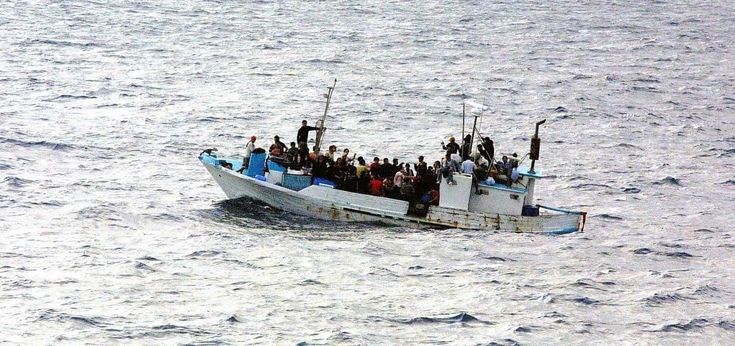
Every year, thousands of young Ethiopians go on a dangerous journey towards the Gulf states and Europe, often without proper documentation and through the hands of smugglers, and they are also often fully aware of the risks and dangers of the journey. The Ethiopian government has spent the past few years improving and implimenting their legal framework, So why does irregular migration keep increasing?
A recent study by Getye Abneh and Fekadu Adugna Tufa published in the African Human Mobility Review, offers a compeling suggestion. . Abneh and Tufa argue that Ethiopia’s legal responses fails not because they are poorly written but because they are not implemented properly and they misunderstand why people migrate in the first place. Drawing on interviews with 18 returnees and five government officials conducted throughout 2023, the researchers found that migrants are not acting irretionally or ignorance.
The Government's Case: Deterrence Through Law
According to Abneh and Tufa, the government has enacted Proclamation No. 1178/2020, which defines trafficking and smuggling as crimes against humanity and prescribes harsh penalties for brokers and traffickers (FEDERAL NEGARIT GAZETTE, 2020), and Proclamation No. 1246/2021, which tightens licensing requirements for international employment agencies (Federal democratic republic of Ethiopia, 2021). Both of the proclamations align properly with the United Nations “Protocol to Prevent, Suppress and Punish Trafficking in Persons Especially Women and Children, supplementing the United Nations Convention against Transnational Organized Crime” and reflect Ethiopia’s international commitments to combat human trafficking (General Assembly resolution 55/25, 2000).
The logic behind these laws is frank: raise the costs and risks of migrating irregularly and fewer people will attempt to travel. This is a rational choice in theory but does it reflect in practice? One government official interviewed for the study put it plainly: “Our laws are strong. However, they are weak in implementation. The low rate of convictions and lack of witnesses decrease effective implementation” (Getye Abneh and Fekadu Adugna Tufa, 2026).Officials in the study broadly agreed that stricter border controls and the prosecution of unlicensed brokers are necessary actions, even as they acknowledged that enforcement on the ground remains inconsistent.
This punishment first approach is not unique to Ethiopia. Abneh and Tufa note that similar strategies, shaped heavily by European Union externalisation policies, have been adopted and implemented in Tunisia and Morocco and have had mixed results, often increasing migrants' vulnerability without actually decreasing the flow of migration.
The Migrant's Case: A Rational Response to an Irrational Situation
For the returnees interviewed, the law was rarely the deciding factor. A large proportion of the returnees already knew that irregular migration was illegal and dangerous, yet they still traveled. One returnee told the researchers, “I knew it was against the law, but I have chosen to face the risks instead of suffering and dying being unemployed” (Getye Abneh and Fekadu Adugna Tufa, 2026). Another returnee argued: “Are laws designed to punish the poor? I want laws that can help me obtain jobs and a safe life” (Getye Abneh and Fekadu Adugna Tufa, 2026)
This is the heart of what Abneh and Tufa call “bounded rationality”. Migrants raised two points against each other: one is the risk of staying home with no job, no income and mounting family pressure and the other is the risk of an unauthorised journey abroad. When weighed against each other and the unemployment and poverty make the first option feel like a catastrophe, and the second option looks reasonable by comparison, no matter the legal repercussions. As the authors state migrants' decisions are shaped not only by calculations but by “subjective perceptions and emotions based on the conditions in which the migrants and their families make the decisions.”
Family and community expectations increase the pressure of migration. Several returnees described migrating not purely for themselves but to support their parents or escape what some consider “ a miserable life at home”. Abneh and Tufa argue that this reflects a broader “culture of migration” in which social networks normalise irregular routes as an accepted household coping strategy, especially when formal migration pathways are concentrated in cities and largely out of reach for rural youths.
A Way Forward
Protecting victims of trafficking and prosecuting exploitative smugglers remain important goals. But they conclude that punishment alone cannot outweigh desperation. They argue that effective policy needs to run on two tracks simultaneously: one is to continue disrupting trafficking networks, while genuinely expanding accessible formal migration channels and domestic job opportunities that give Ethiopians real alternatives to risking their lives on an irregular route.
This is a reminder that migration policy debates are rarely just about border control or just about comparison. They are about whether people at home have something worth staying for and whether the paths abroad that do exist are ones ordinary people can actually walk.
References
Federal democratic republic of Ethiopia. (June 3, 2021). Overseas Employment (Amendment) Proclamation (No. 1246-2021). Mimupada lati ethiodata: https://ethiodata.et/wp-content/uploads/2023/01/Ethiopians-Oversea-Employment-Amendment-Proclamation-No.-1246_2021.pdf
FEDERAL NEGARIT GAZETTE. (April 01, 2020). Proclamation No.1178/2020 - Prevention and Suppression of Trafficking in Persons and Smuggling of Persons. Mimupada lati United Nations: https://www.unodc.org/cld/uploads/res/document/proclamation_no_11782020_prevention_and_suppression_of_trafficking_in_persons_and_smuggling_of_persons_proclamation_html/Proc.1178_Preven_supp._of_Traffic._in_person_Smuggling.pdf
General Assembly resolution 55/25. (November 15 , 2000). Protocol to Prevent, Suppress and Punish Trafficking in Persons Especially Women and Children, supplementing the United Nations Convention against Transnational Organized Crime. Mimupada lati United Nations : https://www.ohchr.org/en/instruments-mechanisms/instruments/protocol-prevent-suppress-and-punish-trafficking-persons
Getye Abneh and Fekadu Adugna Tufa. (April 30 , 2026). Examining Migrants’ Bounded Rationality in the Face of Ethiopia’s Legal Responses to Irregular Migration. Mimupada lati SIHMA: https://sihma.org.za/storage/journals/4.%20Examining%20Migrants'%20Bounded%20Rationality%20in%20the%20Face%20of%20Ethiopia's%20Legal%20Responses%20to%20Irregular%20Migration.pdf
Categories:
Tags:
- Migration Governance
- Domestic Employment
- Rural Migration
- Bounded Rationality
- Migration Deterrence
- Horn Of Africa
- Youth Unemployment
- Economic Migration
- EU Externalisation Policies
- Border Control
- Migration Policy
- Fekadu Adugna Tufa
- Getye Abneh
- African Human Mobility Review
- Human Smuggling
- Proclamation No 1246/2021
- Proclamation No 1178/2020
- Human Trafficking
- Irregular Migration
- Ethiopia