
The Human Reality of Migration in Angola
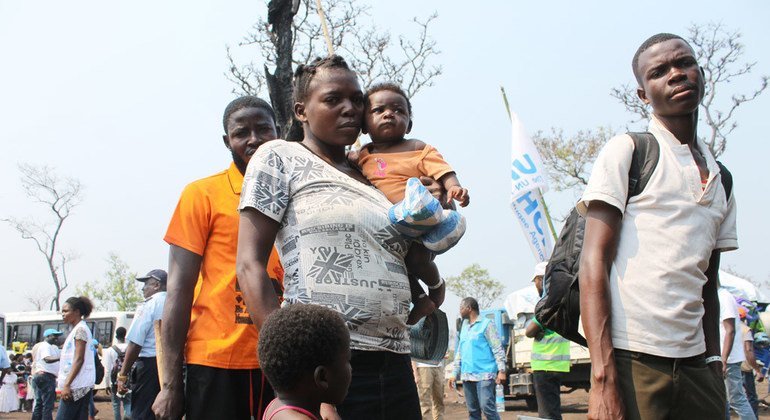
Migration is often seen as and reviewed through the lens of policies, statistics and legal frameworks. Yet, behind every number is a real person: a family looking for safety, a child crossing the border or a local community trying to help newcomers while dealing with its own money problems. To understand migration in Angola, we need to connect what the government plans with what actually happens to people.
Angola has made significant triumphs in drafting legal protections, such as the framework of law No. 13/19 (UNHCR, 2019) and law No. 10/15 (UNHCR, 2015). These frameworks reflect the country’s commitment to preserving human rights and the 1951 refugee convention. These laws represent an effort to balance national security with humanitarian duty. However, local authorities often face the sad reality of having limited resources, infrastructure challenges and difficulties managing porous borders, which makes the application of these laws extremely difficult (People in Need, 2017).
For many migrants, especially those fleeing from the conflicts in DRC, the administration and infrastructure challenges creates a massive sense of uncertainty amongst migrants regarding documentations (Operational Data Portal, 2025). With many finding themselves in a legal limbo, struggling to secure documentation, accessing healthcare, education or formal employment. For migrants this isn’t just an administrative hurdle, it’s a struggle for survival. For the host community and the country, the challenges are equally real, how to provide for new arrivals while ensuring the well-being of the local population?
The situation Is most challenging for unaccompanied minors who are seeking protection or reunification with their separated relatives. The law mandates that detention be a measure of the last resort, the reality is that many minors are very much vulnerable to exploitation, trafficking and trauma (ICRC, 2019). And many of these minors are frequently caught up in immigration enforcement operations, which later results in instances where minors are imprisoned or deported. By acknowledging that the current crisis of implementation is a struggle shared by both the government and those seeking refuge, we can shift the conversation from blame to collaboration.
The fundamental challenge within Angola’s migration space is not lack of progressive legislation but rather a profound crisis of implementation. To bridge this gap, a multi-layered approach is required, this would include expanding access to documentation to pull migrants out of legal limbo, investing in rural development to mitigate the drivers of forced internal displacements and strengthening disaster preparedness systems. Most importantly the state can also ensure that refugees protection is upheld in practice and that the safety and well-being of children are prioritised, ensuring that the law serves as a shield for the vulnerable.
Explore more in-depth data and personal narratives in the Atlas of Migration
References
ICRC. (2019, 07 17). Angola/DRC: The unacompanied children of Lóvua Refugee Camp share their stories. Retrieved from ICRC: https://www.icrc.org/en/document/angoladrc-unacompanied-children-lovua-refugee-camp-share-their-stories
lex.ao. (2020, April 14). Presidential Decree No. 100/20 of April 14. Retrieved from lex.ao: https://lex.ao/docs/presidente-da-republica/2020/decreto-presidencial-n-o-100-20-de-14-de-abril/
Operational Data Portal. (2025, September). Country Angola. Retrieved from Operational Data Portal: https://data.unhcr.org/en/country/ago
People in Need. (2017, Sep 4). Over 33,000 refugees fled violence in DR Congo to Angola. People in Need helps with water, sanitation and hygiene. Retrieved from People in Need: https://www.peopleinneed.net/over-33-000-refugees-fled-violence-in-dr-kongo-to-angola-people-in-need-helps-with-water-sanitation-and-hygiene-4514gp#:~:text=%22All%20the%20way%20we%20went,live%20with%20the%20host%20community.
UNHCR. (2015). Law No. 10 of 2015, Law on the Right of Asylum and the Refugee Status. Retrieved from UNHCR: https://www.refworld.org/legal/legislation/natlegbod/2015/122780
UNHCR. (2019, May 23). Law No. 13 of 2019, on the Legal Regime of Foreign Citizens in the Republic of Angola. Retrieved from UNHCR: https://www.refworld.org/legal/legislation/natlegbod/2019/en/122788
Categories:
Tags:
- Democratic Republic Of Congo
- DRC
- Angola
- Media Resources Human Mobility Africa.
- Migration Think Tanks Africa Partnership
- Refugee Protection Framework South Africa
- Country Of Origin Migration Analysis Africa
- Labour Migration Rights South Africa Legal
- Climate Change And Migration Africa
- Research Data For Journalists Africa Migration
- Reporters Resource Migration Africa
- Migration Policy South Africa SADC Region
- Immigration Law South Africa Updates 2025
- Empowering Migrants In Africa
- Refugee Community Case Studies SA
- Documentation Support For Asylum Seekers SA
- Xenophobia In South Africa Research
- Human Trafficking Resources Africa
- Refugee Integration Programs South Africa
- Immigrant Legal Support Information South Africa
- African Migrant Students Opportunities South Africa
- Migrant Rights South Africa 2025
- Rights Of Refugees In South Africa
- Human Mobility Report Africa Download
- Migration Think Tank South Africa
- Academic Research On Migration In Africa
- Refugee Labour Market Studies South Africa
- Migration Policy Africa Analysis
- Forced Migration Research South Africa
- Displacement Statistics Africa
- Migration Data Africa 2025
- Human Mobility In Africa Studies
- African Migration Research Institute