
Atlas of African Migration: Migration in Chad
Chad stands at the intersection of countries in Africa that experience forced displacement constantly. Positioned at the intersection of the Sahel, the Lake Chad Basin and Central Africa, Chad shares borders with six countries, several of which have experienced, and continue to experience, armed conflicts. . Its strategic geographical location has made Chad a country of Asylum, internal displacement, return migration, and a corridor for circular migration and cross border migration. The UNHCR describes Chad as Africa’s largest refugee host relative to its population, a distinction that awkwardly sits alongside its position near the bottom of global development ranking (UNHCR, 2026).
The Scale of Displacement
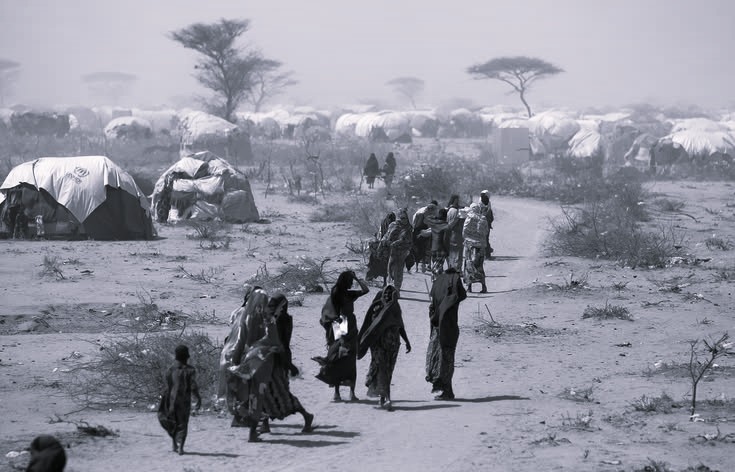
Since the outbreak of the war in Sudan, military actions in the Sahel and other neighbouring countries, Chad has welcomed a large influx of refugees and returnees, despite being among the poorest countries in the world. As of August 2026, Chad has welcomed more than 1.5 million refugees and Asylum seekers from neighbouring countries who are seeking protection and shelter, making it one of Africa’s largest refugee crises (UNHCR, 2026). Together with internally displaced persons and returnees, the total forcibly displaced population stands at approximately 2 million as of the end of July 2026 (UNHCR, 2026). When looking closely at the refugee statistics in Chad, we then realise that the largest share of refugees in the country are Sudanese who sought shelter when the fight broke out between the Sudanese Armed Forces and the Rapid Support Forces, with about 1.3 million refugees at the end of 2025 (UNHCR, 2026).
Behind the Figures: Sarra's Journey
Behind the figures lie individual stories of loss and survival. Sarra, a twenty-year-old Sudanese woman, fled her town of Geneina in West Darfur after armed men attacked the city, spending eleven months displaced inside Sudan before crossing into Chad (Plan International , 2026). She describes the overland journey as: “We walked for 25 days with many stops (Plan International , 2026). We were attacked several times and robbed of the few belongings we had taken with us.” The violent were not incidental to the journey. Sarra’s pregnant sister was killed during one of these attacks and her account for it conveys both grief and the moral incomprehension this produced: “It hurts me so much to think about it. Why would they kill a pregnant woman, why? I saw my sister lying in her own blood. If only I could have helped. If only I could die to save my sister and the child, she was carrying. I would have chosen to exchange my life for hers. But no” (Plan International, 2026) .
There are not many ways for refugees in Chad to earn a living, and even when they do, they frequently find it difficult to get enough food and shelter. But it is also important to note that the struggle to access food and healthcare is not just specific to refugees, but it is also the same struggle many locals (Host Communities) face. The lack of services might also extend to healthcare, clean water, and education, which leaves the already struggling communities in highly vulnerable situations of exploitation and reliant on Humanitarian Assistance, which is also limited. “I now live in the camp with my sister’s 5 other children. My oldest sister, the first born, looks after them. It is so difficult to find food here. The children barely get one meal a day. How I wish I could work to earn some money to support them. I used to be a nurse in my country, but now I am unemployed, so there is nothing I can do,” explains Sarra (Plan International, 2026).
From Emergency to Permanence
Sarra's story illustrates what statistics fail to reveal: that displacement is an ongoing experience of loss, culminating in a situation that provides security but little else, where a qualified nurse finds herself out of work while the children she cares for receive only one meal a day. Importantly, food, healthcare, clean water, and education shortages are faced by host communities as well, so any approach that considers refugees in isolation could foster resentment while neglecting both populations.
As long as the conflicts in Sudan and the Sahel endure, the movement of people will persist, and ongoing international assistance. Having policies that enable refugees to be employed instead of waiting is not an act of kindness but the bare minimum necessary to prevent a drawn-out emergency from becoming a permanent situation.
Read the atlas for more information: https://sihma.org.za/african-migration-statistics/country/chad
References
Plan International . (2026). Sarra and her family face hunger in Chad. Retrieved from Plan International : https://plan-international.org/chad/case-studies/sarra-family-face-hunger-chad/
UNHCR. (2026). Chad. Retrieved from UNHCR: https://www.unhcr.org/where-we-work/countries/chad?dataset=POP&yearsMode=range&selectedYears=%5B2012%2C2026%5D&level=OPR&category=PTY&fundingSource=ALS&compareBy=%5B%22category%22%5D&levelCompare=%5B%5B%22OTCD_ABC%22%5D%5D&viewType=chart&chartType=bar&con
UNHCR. (2026). Chad. Retrieved from UNHCR: https://www.unhcr.org/where-we-work/countries/chad?dataset=POP&yearsMode=range&selectedYears=%5B2012%2C2026%5D&level=OPR&category=CCO&fundingSource=ALS&compareBy=%5B%22category%22%5D&levelCompare=%5B%5B%22OTCD_ABC%22%5D%5D&viewType=chart&chartType=bar&con
UNHCR. (2026). Refugees and Asylum-seekers in the Sahel. Retrieved from UNHCR: https://data.unhcr.org/en/situations/sahelcrisis
Categories:
Tags:
- International Aid
- Human Rights Africa
- Vulnerable Populations
- Refugee Camps
- Humanitarian Relief
- Conflict Displacement
- Personal Stories
- Women Refugees
- SIHMA
- African Migration Statistics
- Plan International
- Refugee Employment
- Healthcare Access
- Food Insecurity
- Humanitarian Assistance
- Host Communities
- Refugee Crisis Africa
- Rapid Support Forces
- Sudanese Armed Forces
- West Darfur
- Geneina
- Darfur Refugees
- Sudan Conflict
- Circular Migration
- Cross-border Migration
- Internal Displacement
- Returnees
- Asylum Seekers
- UNHCR
- African Refugees
- Central Africa
- Sahel Crisis
- Lake Chad Basin
- Forced Displacement
- Chad