

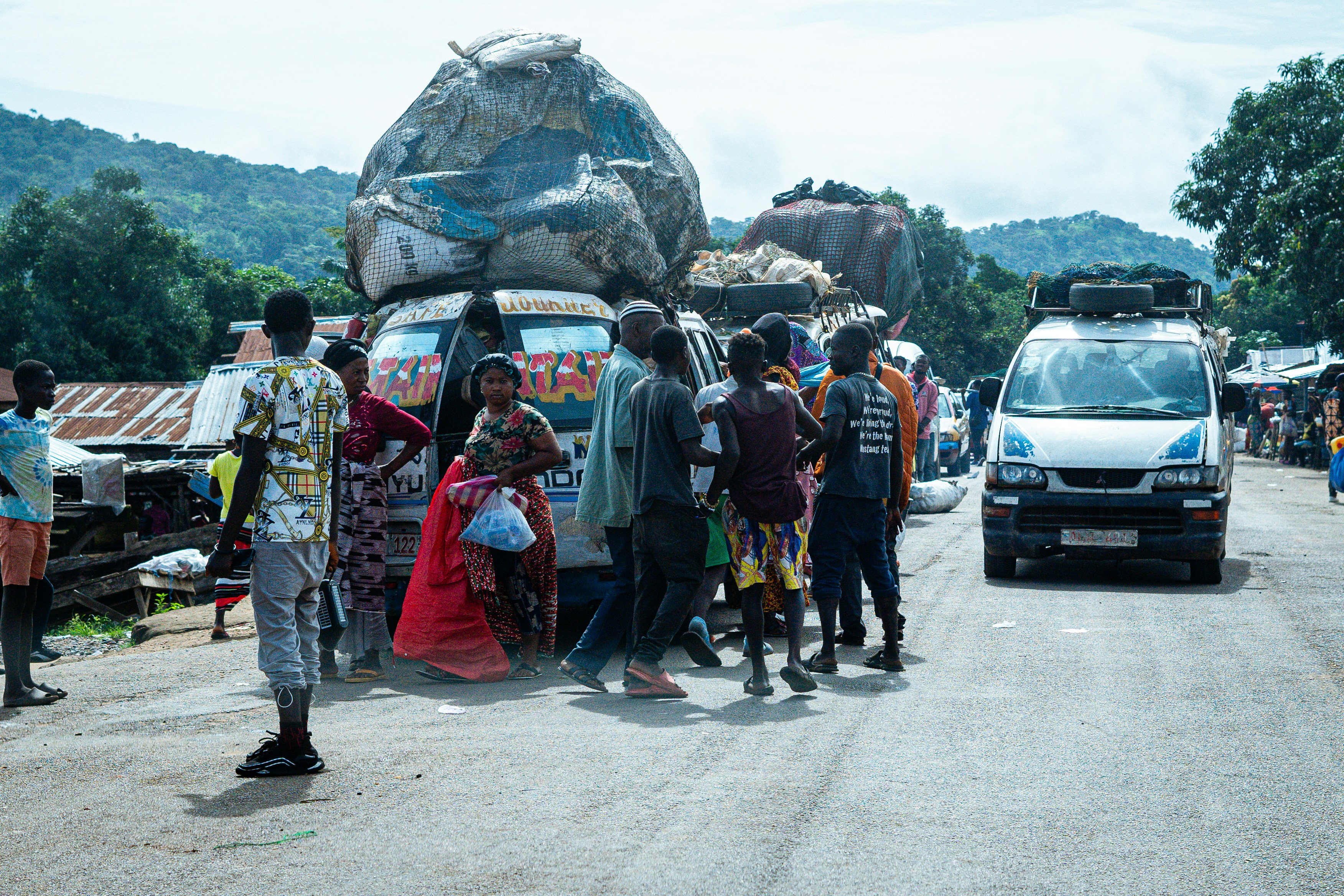
Cameroon: A Story of Shared Resilience and Open Borders
Cameroon is often referred to as “Africa in Miniature”, serving as a profound statement to the power of shared resilience in the face of complex migration dynamics. Since its independence, the nation has established a warm tradition of hospitality, evolving from a signatory of international protocols such as the 1951 Refugee Convention into a vital sanctuary that hosts over 413,000 refugees and asylum seekers (Operational Data Portal, 2026). The “warm open arms” philosophy is formally anchored in law No 2005/006 of July 2005 (UNHCR, 2025), which governs the status of refuges in Cameroon. This legal framework is revolutionary in its approach, treating newcomers as active contributors rather than outsiders. Under this law, displaced individuals are given the freedom of movement, the right to work, and equitable access to healthcare and education on par with Cameroonian nationals (UNHCR, 2025).
The journey of integration in Cameroon is driven by the search for better opportunities and a more stable life. Today, 56% of the population lives in urban areas such as Doula and Yaoundé, a shift driven by young migrants under 35 (Blessing Mberu & Roland Pongou, 2012). This change is continuously increasing, with projections suggesting that 70% of the population will be urban by 2050 (World Bank Group, 2022). The shift in people moving to urban areas signals a move towards modernisation, as the concentration of labour in cities facilitates a structural transition from subsistence agriculture to industrial and service-based economies, improving both technological innovation and social mobility.
However, while the shift towards urban centres is often seen as economic progress, driven by the search for better livelihoods and modernisation. These changes are increasingly shadow the severe humanitarian crisis. Cameroon currently has over 2.1 million internally displaced persons (IDPs). It is crucial to take note that this displacement is predominantly conflict-induced, as families navigate the violent aftermath of internal strife and to some extent of natural disasters. Consequently, many families end up finding refuge not in formal camps but within local communities who share their limited resources to provide a sanctuary.
The most important aspect of migration involves children, who make up about 13% of the international migrant population (Unicef, 2021). Many minors arrive in Cameroon as unaccompanied, fleeing instability in neighbouring regions. Their presence in the country underscores a profound humanitarian responsibility shared by the state and its partners. Furthermore, as a Tier 2 country in the global trafficking report, Cameroon continues to strive for more robust protections to ensure that economic pressures do not compromise the safety of the vulnerable.
To explore these regional dynamics and migration patterns further, you can find detailed data and visualizations in the Atlas of African Migration.
References
Blessing Mberu & Roland Pongou. (2012). Crossing Boundaries: Internal, Regional and International Migration in Cameroon. Obtido de ResearchGate: https://www.researchgate.net/publication/264215345_Crossing_Boundaries_Internal_Regional_and_International_Migration_in_Cameroon
Operational Data Portal. (2026). Cameroon. Obtido de Operational Data Portal: https://data.unhcr.org/en/country/cmr
UNHCR. (08 de 18 de 2025). Law No. 2005/006 of 27 July 2005 on the Status of Refugees in Cameroon. Obtido de UNHCR: https://rimap.unhcr.org/node/42686?page=1
Unicef. (April de 2021). In 2020, the number of international migrants reached 281 million; 36 million of them were children. Obtido de Unicef: https://data.unicef.org/topic/child-migration-and-displacement/migration
World Bank Group. (December de 2022). CREATING MARKETS IN CAMEROON. Obtido de World Bank Group: https://www.ifc.org/content/dam/ifc/doc/2023-delta/cpsd-cameroon-en.pdf
Categories:
Tags:
- Economic Progress
- Social Mobility
- Atlas Of African Migration
- Tier 2 Country
- Human Trafficking
- Unaccompanied Minors
- Child Migrants
- Conflict-induced Displacement
- Humanitarian Crisis
- IDPs
- Internal Displacement
- #Urbanization
- Yaoundé
- Douala
- Urban Integration
- Right To Work
- Freedom Of Movement
- Refugee Status
- Law No 2005/006
- Hospitality
- 1951 Refugee Convention
- Asylum Seekers
- Refugees
- Migration Dynamics
- Africa In Miniature
- Cameroon