
Building Bridges Through Knowledge: Inside SIHMA's Training on Understanding Human Mobility
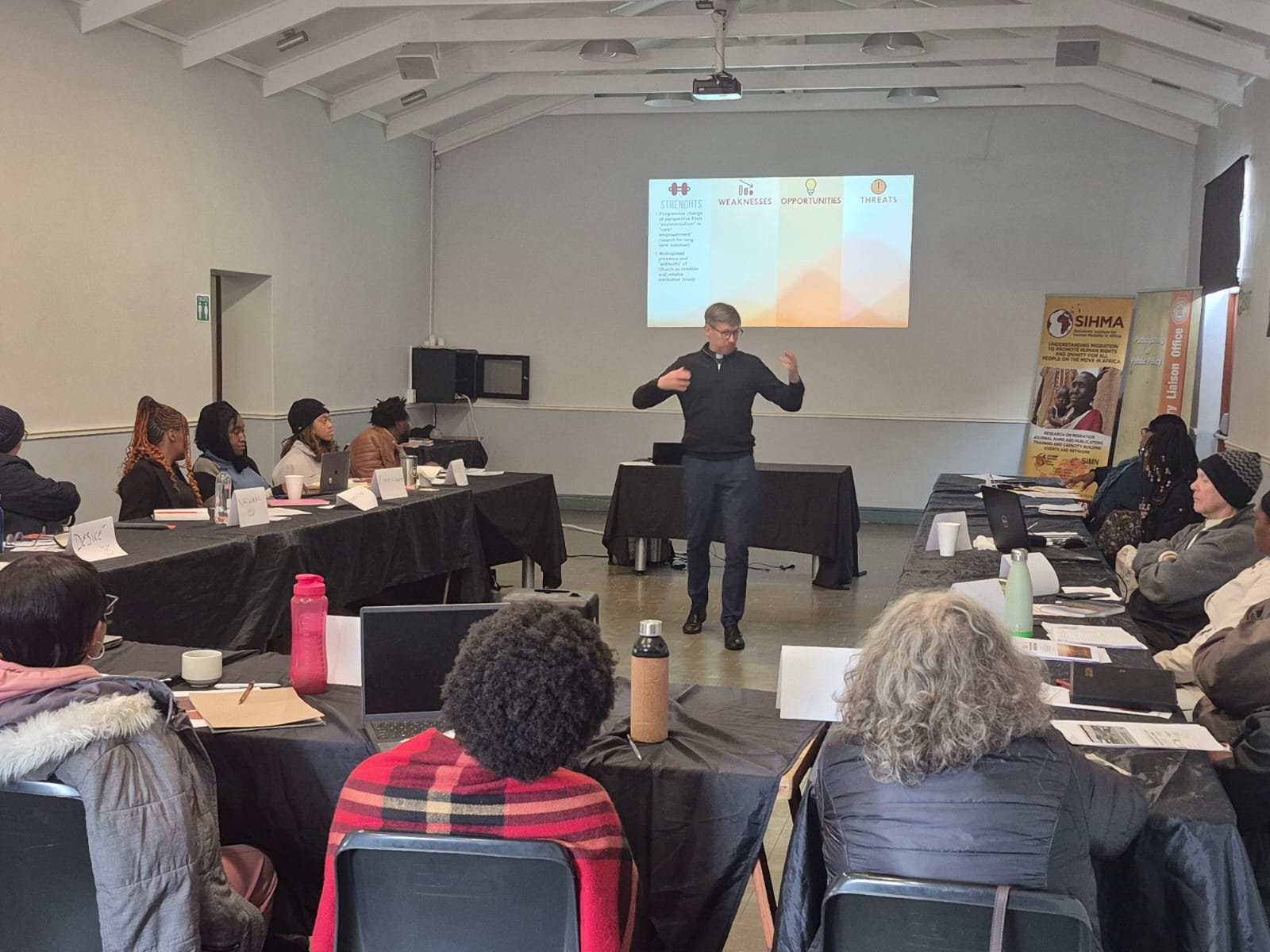
Migration is a far difficult topic and discussion than what the headlines makes it look like. Behind every statistics on border crossings or refugee numbers, lies a web of history, policy, economics, faith and human choices and this is the exact complexicity that SIHMA set out to unpack during a 2 day training on “Understanding Human Mobility in Africa” hosted at St John’s Catholic Church in Maitland on the 21-22 July.
The timming for the training was on the spot, especially since South Africa has seen a sudden rise in anti-immigrant sentiments and violence in recent years, with misinformation often filling the spaces where understanding should be. Rather than leave that gap unaddressed, SIHMA partnered with the Catholic Parliamentary Liaison Office (CPLO) and the Scalabrini Centre of Cape Town to bring together 17 participants ranging from church leaders, civil society representatives, refugee-led organisations and community members for a program designed to turn awareness into action.
The first day laid the conceptual groundwork of the training. Participants explored the patterns and drivers behind “why people move”, before looking at the topic on a deeper level: a theological reflection on hospitality and what it means to welcome a stranger, grounded in scripture was held. The day ended with a meaningful understanding on integration, not as a checkbox that migrants need to tick, but a shared responsibility of both migrants and locals.
Day two moved from theory to practice. A legal expert unpacked the right to seek asylum and protection from forced return, while also exposing the cracks in the system, bureaucratic failures that forces people into a legal limbo and in turn feed the false narrative that irregular migration is simply a lifestyle choice rather than a consequence of broken processes. This session helped participants separate migration myths from actual migration facts, equipting them to challenge misinformation in their own communities rather than simply refute it.
The training ended with a practical lens on ethical support work, treating migrants and refugees not as a passive recipients of aid but as partners whose need should shape any intervention from the outset. Participants left with concrete commitments from raising community awareness and correcting harmful myths to dedicating time and support towards people on the move.
What emerged most clearly from the two days wasn’t just new information, but a shared conviction: real protection, dignity and integration for migrants depends on communities being equiped with accurate knowledge amd not assumptions. In a situation where fear often outpaces facts, training like this offers a space where evidence, faith and loved experiences come together to shape a more informed and humane response to migration.
Categories:
Tags:
- Civic Education
- Migrant Dignity
- Bureaucratic Failures
- Legal Limbo
- Refugee Protection
- Migration Law
- Border Crossings
- Human Rights
- Maitland Cape Town
- Pastoral Care For Migrants
- Ethical Support Work
- Community Action
- Migration Fact Vs Myth
- Forced Displacement
- Migration Policy
- Refugee Advocacy
- Theology Of Hospitality
- Faith And Migration
- Social Integration
- Migration Misinformation
- Anti-Immigrant Sentiments
- Xenophobia In South Africa
- CPLO
- Scalabrini Centre
- Asylum Seekers
- Refugee Rights
- South Africa Migration
- SIHMA
- Human Mobility
- Migration In Africa