

South Africa’s asylum policy and the people caught in between
In April 2024, South Africa’s department of Home Affairs published a white paper on Citizenship, Immigration and Refugee Protection (DHA, 2024). A revised draft followed in 2025, open for public comment until mid-February 2026. The document is a proposal to move away from a residency-based immigration system and more towards a point driven. The proposal affects the lives of many people which also includes asylum seekers and refugees living in the country, and it forces the reckoning with a question, does the promise of a right-based, ubuntu-driven society extend to people who were not born within its borders?
The journal written by Leah Alexis Ndimurwimo tries to hold both sides of that question at the same time. It looks at why the government says reform is neccessary and it looks at what that reform actually does to the asylum seekers, refugees and migrant families who will live under it. Neither side of the story is simple and treating it as “Simple” is part of how the debate has gone wrong.
The Government’s Case for a Harder Line
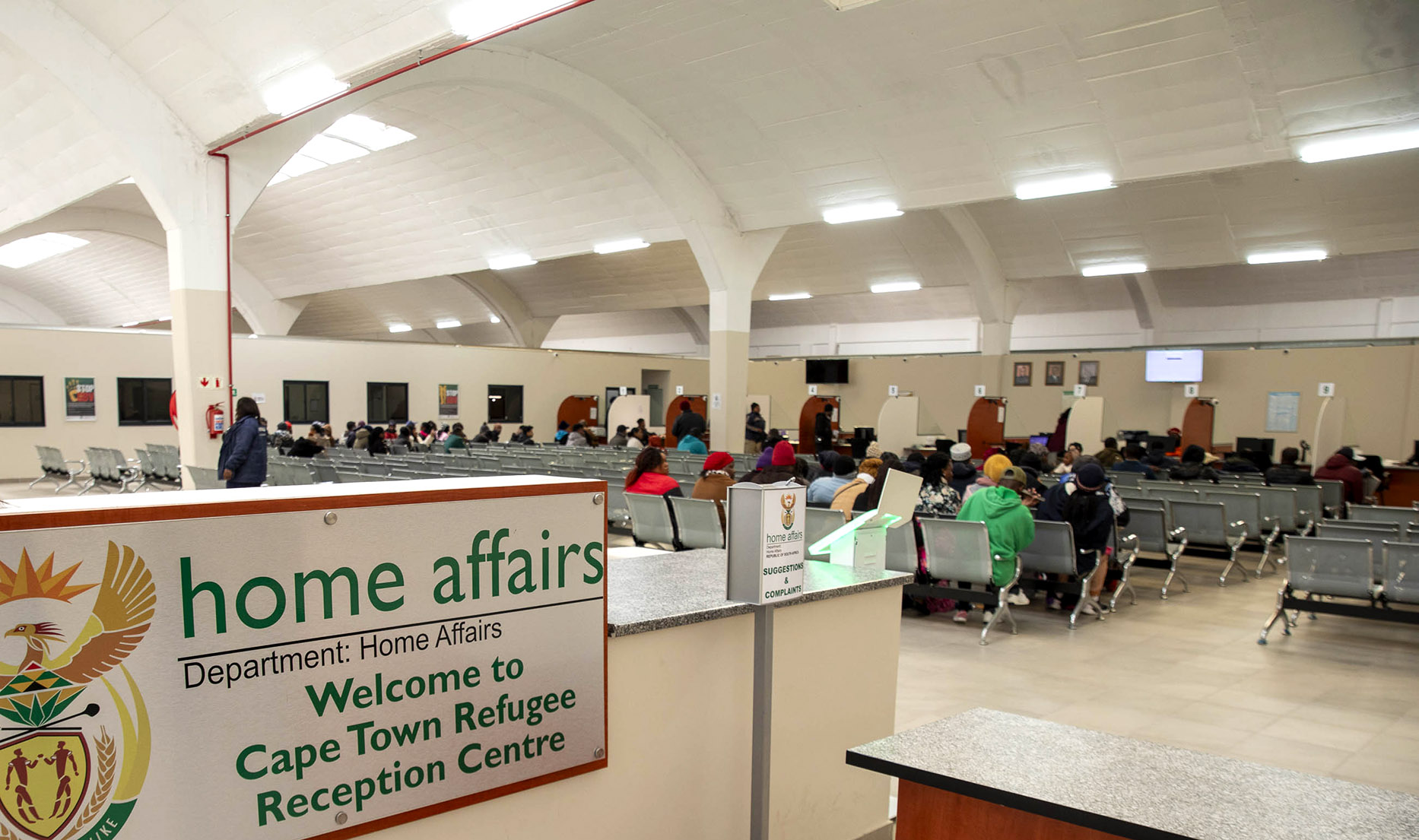
Government officials have been fairly straightforward about their reasoning. As Ndimurwimo mentions in the journal, when the white paper was announced, the Minister of Home Affairs framed it as an attempt to fix laws that do not speak to one another, which includes citizenship laws, immigration and refugee protection laws. All these laws have been amended over the past years but none of them were designed with the others in mind. The stated goal is to put all these laws into a single coherent framework, close loopholes that allow rejected applicants to reapply indefinitely, and align South Africa’s posture with that of other western progressed nations that have tightened immigration rules despite having far greater resources to absorb newcomers. There is also an administrative argument that is easy to dismiss but hard to fully ignore. As mentioned in the journal, the Department of Home Affairs points to the overwhelmed Refugee Reception Offices, year long backlogs in processing applications and a documentation system that is so strained that officials themselves have struggled to distinguished genuine asylum seekers from undocumented economic migrants. From this point of view, a stricter, more security focused system, first-safe-country rules, digitised applications, tighter renewal windows, is less about hostility to foreigners than about administrative capacity to a department that has been in a state of disfunction for years.
The government voices have also pointed these changes to social strain. South Africa’s unemployment rate is high, public services are stretched and there is real competition for housing, healthcare and jobs in urban centres where both citizens and migrants are concentrated (Neville Matjie, 2026). Officials have argued, not without some justification, that a country cannot indefinitely absorb new arrivals without a plan for how those services will be funded and delivered (Claudia Pizzocri, 2026). Seen through this lens, tighter border management and a merit-based points system for citizenship and residency, rewarding remote workers, entrepreneurs, and skilled labour, are framed as pragmatic tools for managing scarcity rather than a denial of South Africa's international obligations (RSA Government, 2025). It is worth taking these arguments seriously rather than dismissing them outright. Every state, including wealthy ones, struggle with the tension between open humanitarian commitments and finite domestic resources. South Africa is not unique in tightening its posture, it is following a broader global drift, visible in the United Kingdom's now-abandoned third-country deportation arrangement with Rwanda (Home Office, 2022), in the European Commission's 2025 push to allow member states to deport migrants to countries beyond their countries of origin, and in the United States own aggressive use of third-country removals. When framed this way, South Africa's White Paper is one node in a much larger international retreat from the open-ended humanitarianism of the post-war refugee order (Leah Alexis Ndimurwimo, 2026 ).
What the Policy Looks Like from the Other Side of the Counter
For the people the “White Paper” actually affects, the reality looks different. Refugee status in South Africa has historically been a pathway to permanent residency; however, the process is slow and painful for applicants (Ruvi Ziegler, 2020). The revised framework removes that pathway all together, which then means a person who has lived, worked and raised children in South Africa for decade or more under refugees status may never be permitted to have permanent roots, no matter how settled their life has become (RSA Government, 2025). For someone who fled war, persecution or generalised violence with no realistic prospect of safe return, the message in the policy shift is blunt: “You may stay, but you will never fully belong”. This shift and what it means for long-settled refugee families, is examined at length in Leah Alexis Ndimurwimo's journal on the subject.
The on the ground experience of asylum seekers in South Africa has been one of administrative attrition rather than outright rejection. With Refugee Reception Offices (RRO) closing or relocating with little notice and processing delays that stretch for years. The right to work or study that accompany asylum seeker permit has been shorten, leaving people in suspense, unable to build a stable life and unable to go back home due to the dangers that continuously persists. Under the current rules, a permit holder who misses a renewal window by even a few weeks can be deemed to have abandoned their claim entirely and reclassified as an illegal foreigner, eligible for detention and deportation with no path back into the system.
Beyond the paperwork, there is the lived reality of hostility. Migrants and Asylum Seekers in South Africa have repeatedly been targeted by waves of Xenophobic violence and by organised anti-migrant movements that pressure landlords, employers and even healthcare workers to exclude foreign nationals from housing, jobs and basic services (Rachel Savage, 2026). For many refugee families, the White Paper’s tightened rules do not exist in isolation, they land on top of an environment where being visibly foreign already carries real physical and economic risk, and where police have often been reluctant to pursue cases in which migrants are the victims rather than the suspects. The journal by Leah Alexis Ndimurwimo highlights these patterns of hostility as part of the broader picture facing migrants in South Africa.
Where this Leaves Things?
South African courts have so far functioned as the main counterweight to the executive’s more restrictive approach. In a string of cases, including rulings on renewal deadlines for asylum permits, the detention of unaccompanied migrant children and the right of long-settled refugees to practise law or access social security, the judiciary has repeatedly affirmed that constitutional protections do not stop at the question of citizenship. Judges have insisted that delay in lodging an asylum claim does not disqualify a genuine refugee and that the state must carefully assess a claim before resorting to deportation (SAFLII, 2026). But courts can only respond to cases brought before them, they cannot on their own, resolve the underlying tension between a government under fiscal and political pressure to appear tough on migration and a resident population of refugees and asylum seekers whose safety depends on the opposite approach.
A more durable path forward likely must hold the legitimate parts of each argument together rather than picking a side. That means acknowledging that the Department of Home Affairs does need better systems, faster processing, digitised records, coordinated legislation, without accepting that efficiency requires abandoning non-refoulement or stripping refugees of a route to eventual belonging. It means recognising that South Africa cannot single-handedly absorb every person displaced by conflict in the region, while also insisting that the burden of that reality should be shared internationally rather than resolved by quietly making conditions for asylum seekers within South Africa's own borders unliveable. And it means being honest that public frustration over unemployment and strained services is real and cannot simply be waved away as bigotry, even as it must be firmly separated from the organised anti-migrant campaigns that have turned that frustration into targeted harassment and violence. This is, in essence, the balance that Leah Alexis Ndimurwimo's journal ultimately calls for.
Link to the Journal: https://sihma.org.za/storage/journals/3.%20Redefining%20Belonging%20South%20Africa's%202024%20White%20Paper%20Reshapes%20Asylum%20Policy.pdf
References
Claudia Pizzocri. (Feb 3 , 2026). Eroding democracy — scapegoating foreigners is a sign of institutional exhaustion. Mimupada lati Daily Maverick: https://www.dailymaverick.co.za/opinionista/2026-02-03-eroding-democracy-scapegoating-foreigners-is-a-sign-of-institutional-exhaustion/?dm_source=blocks-horizontal&dm_medium=card-link&dm_campaign=inform
DHA. (April 17 , 2024). White Paper on Citizenship, Immigration, and Refugee Protection. Government Gazette No. 50530, 17 April 2024. Mimupada lati DEPARTMENT OF HOME AFFAIRS: https://www.gov.za/sites/default/files/gcis_document/202404/50530gon4745.pdf
Home Office. (04 14, 2022). Memorandum of understanding between the UK and Rwanda. Mimupada lati Gov.uk: https://www.gov.uk/government/publications/memorandum-of-understanding-mou-between-the-uk-and-rwanda
Leah Alexis Ndimurwimo. (April 30 , 2026 ). Redefining Belonging: South Africa’s 2024 White Paper Reshapes Asylum Policy. Mimupada lati SIHMA: https://sihma.org.za/storage/journals/3.%20Redefining%20Belonging%20South%20Africa's%202024%20White%20Paper%20Reshapes%20Asylum%20Policy.pdf
Neville Matjie. (July 3, 2026). Beyond the Blame: The Real Story Behind South Africa’s Jobs Crisis. Mimupada lati CNBC Africa: https://www.cnbcafrica.com/2026/beyond-the-blame-the-real-story-behind-south-africas-jobs-crisis
Rachel Savage. (July 26, 2026). Beaten, robbed and driven out: violent demonstrations target immigrants in South Africa. Mimupada lati The Guardian: https://www.theguardian.com/world/2026/jul/26/violent-demonstrations-target-immigrants-south-africa
RSA Government. (Dec 12 , 2025). Minister Leon Schreiber invites public comment on the Draft Revised White Paper on Citizenship, Immigration and Refugee Protection. Mimupada lati South African Government: https://www.gov.za/news/speeches/minister-leon-schreiber-invites-public-comment-draft-revised-white-paper-citizenship
Ruvi Ziegler. (December 3 , 2020). Access to effective refugee protection in South Africa: legislative commitment, policy realities, judicial rectifications? Mimupada lati The Open University: https://core.ac.uk/outputs/323052706/?source=1&algorithmId=15&similarToDoc=14656&similarToDocKey=CORE&recSetID=a3373add-592a-4dbe-8cb4-e3e4fd187400&position=5&recommendation_type=same_repo&otherRecs=12625%2C84144705%2C327947824%2C153516599%2C323052706
SAFLII. (September 22 , 2021). Centre for Child Law v Director General: Department of Home Affairs and Others (CCT 101/20) [2021] ZACC 31; 2022 (2) SA 131 (CC); 2022 (4) BCLR 478 (CC). Mimupada lati SAFLII: https://www.saflii.org/za/cases/ZACC/2021/31.html
SAFLII. (July 7 , 2026). Scalabrini Centre of Cape Town and Another v Minister of Home Affairs and Others (CCT126/25) [2026] ZACC 30. Mimupada lati SAFLII: https://www.saflii.org/za/cases/ZACC/2026/30.html
Categories:
Tags:
- Displacement And Belonging
- Judicial Oversight Migration
- Anti-migrant Sentiment
- Border Management
- African Migration Policy
- SIHMA
- Human Rights South Africa
- Legal Protections Asylum Seekers
- Non-refoulement
- Refugee Reception Offices
- Migrant Rights
- Xenophobia In South Africa
- Permanent Residency Refugees
- Points-based Immigration System
- Immigration Reform
- Refugee Rights South Africa
- Leah Alexis Ndimurwimo
- Department Of Home Affairs
- White Paper On Citizenship Immigration And Refugee Protection
- South Africa Asylum Policy