

ONLINE DISSEMINATION: An assessment of legal frameworks for access to asylum for refugees and for the protection of Children on the Move in Malawi
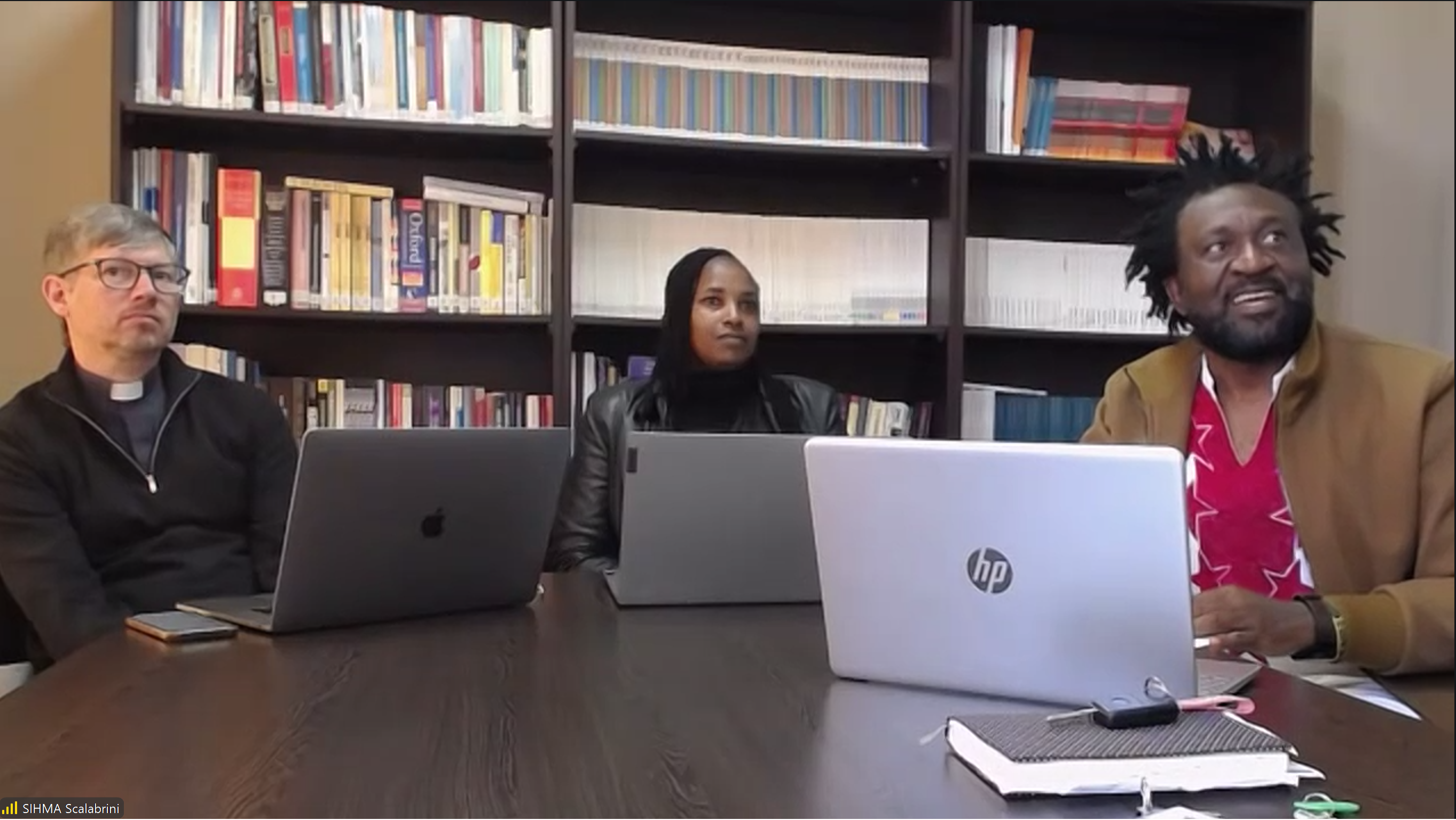
On the 22 October, the Scalabrini Institute for Human Mobility in Africa (SIHMA) held an online Dissemination workshop for the launch of the research report titled: An assessment of legal frameworks for access to asylum for refugees and for the protection of Children on the Move in Malawi. The event brought together stakeholders from diverse background to bring diverse perspectives on migration and share the key findings of the report.
The programme was coordinated by Dr Muluh Momasoh and opened with Fr Filippo, who gave an overview of SIHMA and explained that the institute conducts research to inform policies and programmes for people on the move.
The first part of the report findings was led by Dr Rachel, where she explained the nuances that is associated with the implementation of the Malawi’s Refugees Act of 1989 by government officials, immigration officers and the people at the forefront of receiving asylum seekers at entry ports. Dr Rachel also stressed the ongoing struggles of refugees and asylum seekers in the country, where many are turned away at entry ports, wait for years before receiving decisions of their immigration status and also held at transit shelters for a long time. Dr Rachel also identified the refugees and encampment policies as a limiting factor, that affects freedom of movement and access to livelihoods, education, and other opportunities for refugees, asylum seekers, and their families. Affecting both individual wellbeing and prospects for long-term integration and self-reliance. The conversation also pointed to a lack of resources and the commercialisation of protection as a major gap.
The second part of the report findings was led by Dr Grace, which focused on the protection of Children on the move. Dr Grace highlighted issues around documentation stating that there is a huge gap in the documenting and identification processes, resulting in children being placed in situations and conditions that expose them to trafficking, detention and exploitation. Dr Grace then raised concerns over the barriers many refugee have to go through in order to get the birth certificates for their kids. The conversation also expanded to unaccompanied and separate children, who are often exposed to various dangers and struggle to get documentation forcing many to lie about their age just so that they are granted documentation, so that they are able to work and earn money and as well as to get married early, these were just some examples raised during the event and the might be a lot more reasons for this as well. Dr Grace also flagged problems with alternative care and family tracing, where many children were hesitant to reunify with relatives in their home countries and some preferring to reunify with family members abroad, fearing that connecting with relatives back home might affect their resettlement process. In cases where families are not found, some children join foster families in the camps.
Dr Grace closed with 3 priority actions:
- Ensuring safe homes and legal assistance for children
- Standardising best interest assessments and case management procedures
- Strengthen government leadership and policy reform so that durable solutions are child-sensitive.
After Dr Grace’s presentation, SIHMA opened the floor for discussions and one of the participant stressed that when working with children the approach should be hollistical, with the attention to their protection, development and survival. Another participant also shared an observation that Malawi has good migration policies on paper, but that a lack of political will holds back enforcement. Another participant also shared her hopes that the new proposed refugee bill will bring improvements in terms of implementation and accountability.
One noticable discussion point that kept on returning, was the fact that similar to many other countries, the legal framework exists and the main challenge is implementation. Participants saw the ongoing review of the refugee Act in Malawi as a chance to close the gaps and agreed that civil society has a role to play. Participants and civil society stakeholders were encouraged to use the research report as a resource when giving inputs and suggestions for the review, to engage in high level advocacy with relevant government ministries and departments.
Link to the Report: https://sihma.org.za/reports/an-assessment-of-legal-frameworks-for-access-to-asylum-for-refugees-and-for-the-protection-of-children-on-the-move-in-malawi?lang=en
Categories:
Tags: