

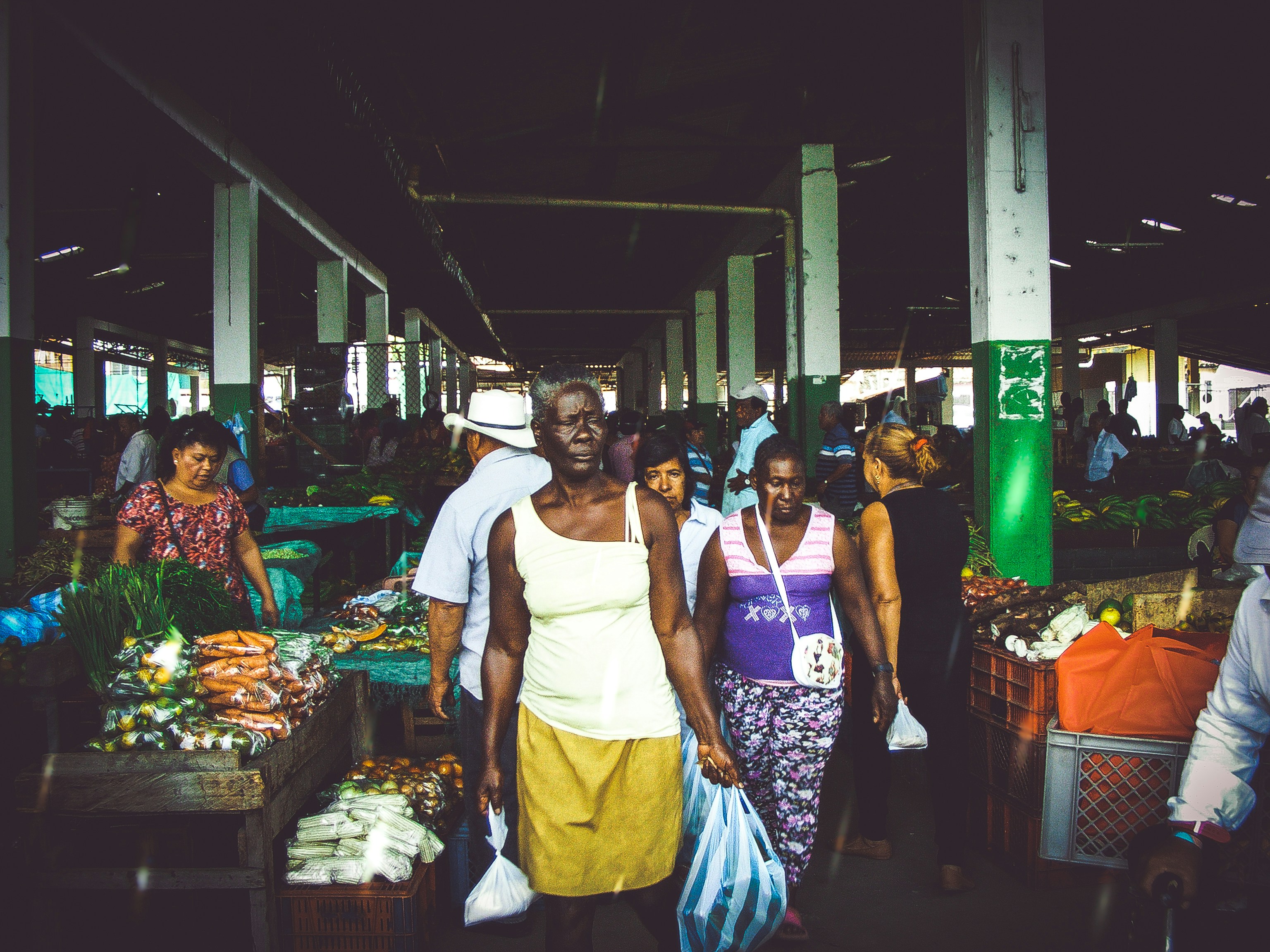
Intersectionality of Gender, Culture, and Identity in Migrant Women’s Integration in Africa
This blog post is based on the article written by Charity Mawire and Dikeledi Mokoena, titled “Intersectionality of gender, culture and identity in migrant women’s integration in Africa,” which has been published in the African Human Mobility Review (Volume 11, No 3, 2025) (Charity Mawire & Dikeledi Mokoena, 2025). The blog is an overview and summary of their work, which is intended to make key ideas of the journal available to a general audience. It does not represent the full original research, and readers are encouraged to refer to the full article for a deeper and more compressive understanding.
Mawire and Mokoena explores how migrant women in Africa experience integration into their new host communities, arguing that the experience they face are very much linked to their gender, migration status and social position. These experiences affect the opportunities available to them, the way people treat them and impact on their sense of belonging. According to Mawire and Dikeledi Mokoena, Migration in Africa is gendered, meaning that men and women experience migration differently. While there has been an increase in independent female migration, many females still migrate as dependents meaning that they migrate to join their spouses or family members. The author also highlights that this dependency often makes it harder for women to integrate economically and socially.
Mawire and Mokoena shows how traditional expectations of women’s role in the family such as staying home and providing care restricts their involvement in public life and discourse. These norms detach migrant women and reduce their prospect to build a social network, which are also crucial for integration. The authors also reveal how migrant women perceptions are influenced by identity; women are often expected to uphold cultural traditions which can limit their freedom and reinforce existing inequalities.
Despite these challenges, Mawire and Mokoena emphasises that migrant women demonstrate agency. They regularly navigate barriers by forming social networks, joining community groups and participating in formal support systems. The approach taken by most migrants helps migrants access work and build connections that support integration. However, the authors also points out that policies in Africa remains gender-neutral and fails to address the struggles of migrant women, and they argue that a more sensitive approach could be considered and the policies need to support migrant women by improving access to opportunities and recognising their unique experiences.
References
Charity Mawire & Dikeledi Mokoena. (2025, December 22 ). Intersectionality of Gender, Culture, and Identity in Migrant Women’s Integration in Africa. Retrieved from SIHMA:
Categories:
Tags:
- Media Resources Human Mobility Africa.
- Migration Think Tanks Africa Partnership
- Refugee Protection Framework South Africa
- Country Of Origin Migration Analysis Africa
- Labour Migration Rights South Africa Legal
- Climate Change And Migration Africa
- Research Data For Journalists Africa Migration
- Reporters Resource Migration Africa
- Migration Policy South Africa SADC Region
- Immigration Law South Africa Updates 2025
- Empowering Migrants In Africa
- Refugee Community Case Studies SA
- Documentation Support For Asylum Seekers SA
- Xenophobia In South Africa Research
- Human Trafficking Resources Africa
- Refugee Integration Programs South Africa
- Immigrant Legal Support Information South Africa
- African Migrant Students Opportunities South Africa
- Migrant Rights South Africa 2025
- Rights Of Refugees In South Africa
- Human Mobility Report Africa Download
- Migration Think Tank South Africa
- Academic Research On Migration In Africa
- Refugee Labour Market Studies South Africa
- Migration Policy Africa Analysis
- Forced Migration Research South Africa
- Displacement Statistics Africa
- Migration Data Africa 2025
- Human Mobility In Africa Studies
- African Migration Research Institute