

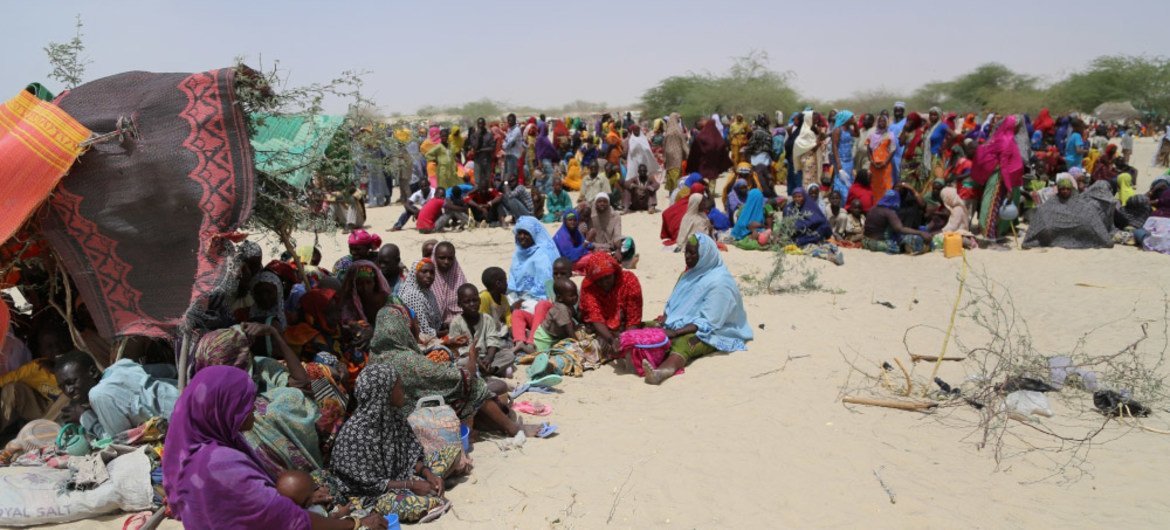
Forced Displacement in Niger
In recent years, Niger has seen a sharp rise in forced migration and internal displacement. The Atlas of African Migration an online resource developed by SIHMA, highlights how continuous violence, environmental stress, and regional instability influence mobility patterns throughout the continent. In the case of Niger, displacement trends have been hastened by climate-related disasters as well as worsening political and security conditions in nearby nations.
Communities around the nation have changed as a result of relocation brought on by conflict and natural disasters. Natural disasters and intercommunal conflict between growers and pastoralists are the main causes of relocation, according to the Internal relocation Monitoring Centre (IDMC, 2024). About 181,000 people were dislocated in 2023, substantially in the Tillaberi and Diffa regions. An estimated 347,000 individualities had been displaced by violence and conflict by the end of the year. Food instability and hunger have increased as a result of environmental shocks and instability because a significant section of Niger's population depends on husbandry (IDMC, 2024).
Local populations live alongside deportees and refugees, numerous of whom are from near Nigeria and Mali, in areas like Tillabéri, Tahoua, Maradi, Diffa, Agadez, and Niamey. Still, Niger’s formerly weak institutional capacity to help vulnerable migrants and displaced populations has been oppressively hampered by fiscal warrants assessed by the European Union, ECOWAS, and Western benefactors in the wake of the July 2023 military achievement (ACAPS, 2024).
All effects considered, Niger holds a complicated and precarious place in indigenous migration patterns. The convergence of political insecurity, climate- related disasters, and intercommunal violence has aggravated internal relegation while solidifying Niger's position as a major transit and destination nation for migrants. Both original communities and the formerly underfunded governmental institutions are under tremendous strain from these interlocking processes. Likewise, Niger's capability to adequately address philanthropic requirements has been further limited bypost-coup fiscal warrants and transnational migration control regulations. thus, combating forced migration in Niger necessitates a multifaceted strategy that incorporates sustainable development, conflict resolution, climate adaptation ways, and ongoing transnational cooperation. In the coming times, relegation and vulnerability are anticipated to continue and worsen in the absence of combined indigenous and transnational intervention.
Link to the Atlas of African Migration: https://sihma.org.za/african-migration-statistics/country/ne
References
ACAPS. (2024, 055 22). Cross-border displacement in Agadez, Maradi, Diffa, and Tillaberi regions. Retrieved from European Commission: https://www.acaps.org/fileadmin/Data_Product/Main_media/20240522_ACAPS_Briefing_note_Niger_cross-border_displacement.pdf
IDMC. (2024). Niger. Retrieved from IDMC: https://www.internal-displacement.org/countries/niger/
IOM. (2019, August 03). IOM Opens New Transit Center for Unaccompanied Migrant Children in Niamey. Retrieved from IOM: https://rodakar.iom.int/news/iom-opens-new-transit-center-unaccompanied-migrant-children-niamey
IOM. (2019). Migration trends from, to and within the niger. Retrieved from IOM: https://publications.iom.int/system/files/pdf/iom-niger-four-year-report.pdf
The Associate Press. (2025, April 25). More than 1,800 migrants expelled from Algeria into Niger, rights group says. Retrieved from The Associate Press: https://apnews.com/article/algeria-niger-migrants-expulsions-alarmphone-sahara-eb1e88277e5a5b7d696b4ff7502ca998
UNICEF. (2018, August 14 ). Migrant children expelled to Niger. Retrieved from UNICEF: https://www.unicef.org/niger/press-releases/migrant-children-expelled-niger
Categories:
Tags:
- Media Resources Human Mobility Africa.
- Migration Think Tanks Africa Partnership
- Refugee Protection Framework South Africa
- Country Of Origin Migration Analysis Africa
- Labour Migration Rights South Africa Legal
- Climate Change And Migration Africa
- Research Data For Journalists Africa Migration
- Reporters Resource Migration Africa
- Migration Policy South Africa SADC Region
- Immigration Law South Africa Updates 2025
- Empowering Migrants In Africa
- Refugee Community Case Studies SA
- Documentation Support For Asylum Seekers SA
- Xenophobia In South Africa Research
- Human Trafficking Resources Africa
- Refugee Integration Programs South Africa
- Immigrant Legal Support Information South Africa
- African Migrant Students Opportunities South Africa
- Migrant Rights South Africa 2025
- Rights Of Refugees In South Africa
- Human Mobility Report Africa Download
- Migration Think Tank South Africa
- Academic Research On Migration In Africa
- Refugee Labour Market Studies South Africa
- Migration Policy Africa Analysis
- Forced Migration Research South Africa
- Displacement Statistics Africa
- Migration Data Africa 2025
- Human Mobility In Africa Studies
- African Migration Research Institute