
Atlas of African Migration: Algeria’s Migration Reality
The role of Algeria in African migration is unique. The nation, which is situated between Europe and Sub-Saharan Africa, serves as a transit point for migrants and a host for refugees. It also faces persistent issues with displacement. Persistent refugee crises, shifting asylum trends, and protection gaps for vulnerable populations have changed the country’s migration landscape, exposing a complex humanitarian and security situation that characterises the region.
One of the most difficult/painful displacement situations in Africa involved the Sahrawi refugees. More than 173, 600 people live in different desert camps in southern Algeria, with many being born or being there after the Sahara conflict in 1975. Life in camps has become extremely challenging, with limited job opportunities and heavily rely on humanitarian assistant for basic needs. About 90, 000 people in the camps are at risk of facing food insecurity and exposure to environmental hazards such as sandstorms and flooding. This shows how long-term displacements often leads to dependence on aid, especially when opportunities are scarce (SIHMA, 2025, as cited in UNHCR, 2020).
Algeria’s asylum developments have shown an increase in recent years, influenced by both global and domestic factors. In 2020, asylum applications fell due to the pandemic resulting in the closure of borders and restrictions of movement, with authorities receiving less than 2200 applications compared to 3399 during the same period in the previous year. The main countries of origin for most asylum seekers include Cote d’Ivoire, Guinea, Mali, Cameroon and Syria. These patterns implies that administrative access and mobility restrictions can heavily influence asylum rates (SIHMA, 2025, as cited in UNHCR, 2020).
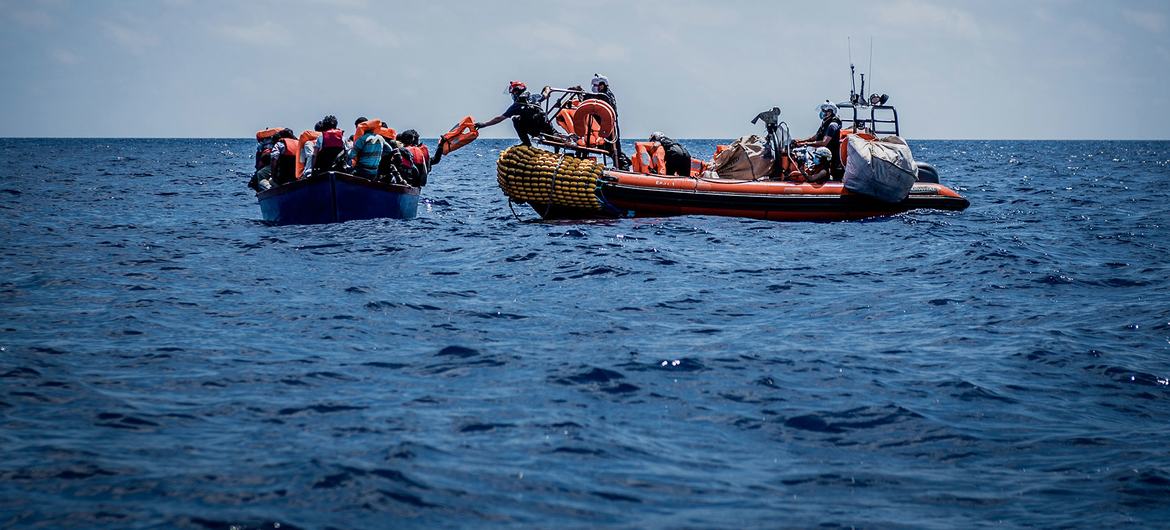
Algeria is one of the major transit routes for trafficking and smuggling networks linking sub-Saharan Africa and Europe. Irregular migrants are particularly vulnerable to trafficking and smuggling due to financial hardships, language barriers and limited protection. Due to this many irregular migrants are exposed to exploitation, which appears in various forms, including sexual violence, forced labour and coerced domestic work and debt bondage linked to smuggling costs (SIHMA, 2025, as cited in US DEPARTMENT OF STATE, 2020). A lot of survivors usually struggle to access help and because of this a lot of women and children travelling alone are a lot more exposed to risks and shortages in victim identifications and support services. Although awareness programs exist, international evaluations place Algeria’s anti-trafficking efforts in the lowest tier, raising attention to the urgent need for stronger prevention measures and tougher security protocols (SIHMA, 2025, as cited in US DEPARTMENT OF STATE, 2020).
The above information has been drawn from the Atlas of Migration platform, an online platform containing migration profiles and data of different African countries. The Atlas of African Migration shows that the migration landscape in Algeria is massively influenced by transit and refugee settlements (SIHMA, 2025). Addressing these issues, guarantees migration protection and facilitates safer border mobility as well as effective migration management. Improving outcomes for displaced and vulnerable people requires sustaining defences, increasing services and coordinating national and international initiatives. Algeria’s dual role emphasizes how policies and initiatives that uphold human dignity and reduce vulnerability are needed.
References
SIHMA. (2025, 04 22). Algeria. Retrieved from SIHMA: https://sihma.org.za/african-migration-statistics/country/dz
SIHMA, 2025, as cited in UNHCR. (2020, September). Algeria. Retrieved from SIHMA: https://webarchive.archive.unhcr.org/+/https://reporting.unhcr.org/sites/default/files/Algeria%20-%20Factsheet%20September%202020.pdf
SIHMA, 2025, as cited in US DEPARTMENT OF STATE. (2020). 2020 Trafficking in Persons Report: Algeria. Retrieved from US DEPARTMENT OF STATE: https://www.state.gov/reports/2020-trafficking-in-persons-report/algeria/
Categories:
Tags:
- Media Resources Human Mobility Africa.
- Migration Think Tanks Africa Partnership
- Refugee Protection Framework South Africa
- Country Of Origin Migration Analysis Africa
- Labour Migration Rights South Africa Legal
- Climate Change And Migration Africa
- Research Data For Journalists Africa Migration
- Reporters Resource Migration Africa
- Migration Policy South Africa SADC Region
- Immigration Law South Africa Updates 2025
- Empowering Migrants In Africa
- Refugee Community Case Studies SA
- Documentation Support For Asylum Seekers SA
- Xenophobia In South Africa Research
- Human Trafficking Resources Africa
- Refugee Integration Programs South Africa
- Immigrant Legal Support Information South Africa
- African Migrant Students Opportunities South Africa
- Migrant Rights South Africa 2025
- Rights Of Refugees In South Africa
- Human Mobility Report Africa Download
- Migration Think Tank South Africa
- Academic Research On Migration In Africa
- Refugee Labour Market Studies South Africa
- Migration Policy Africa Analysis
- Forced Migration Research South Africa
- Displacement Statistics Africa
- Migration Data Africa 2025
- Human Mobility In Africa Studies
- African Migration Research Institute