
A Nation in Motion: Nigeria's Triple Role as Migrant Source, Refuge and Crossroads
Nigeria holds an intriguing position on the African continent: it is a country that people flee to, from, and through at the same time. With a population of well over 220 million, Africa's most populous country both produces one of the continent's largest displaced populations and sends a significant number of skilled migrants abroad, while also hosting refugees escaping wars in neighbouring nations. Keeping all of these movements, both forced and voluntary, internal and international in one perspective is necessary to comprehend Nigeria's migration reality.
A Country Under Displacement
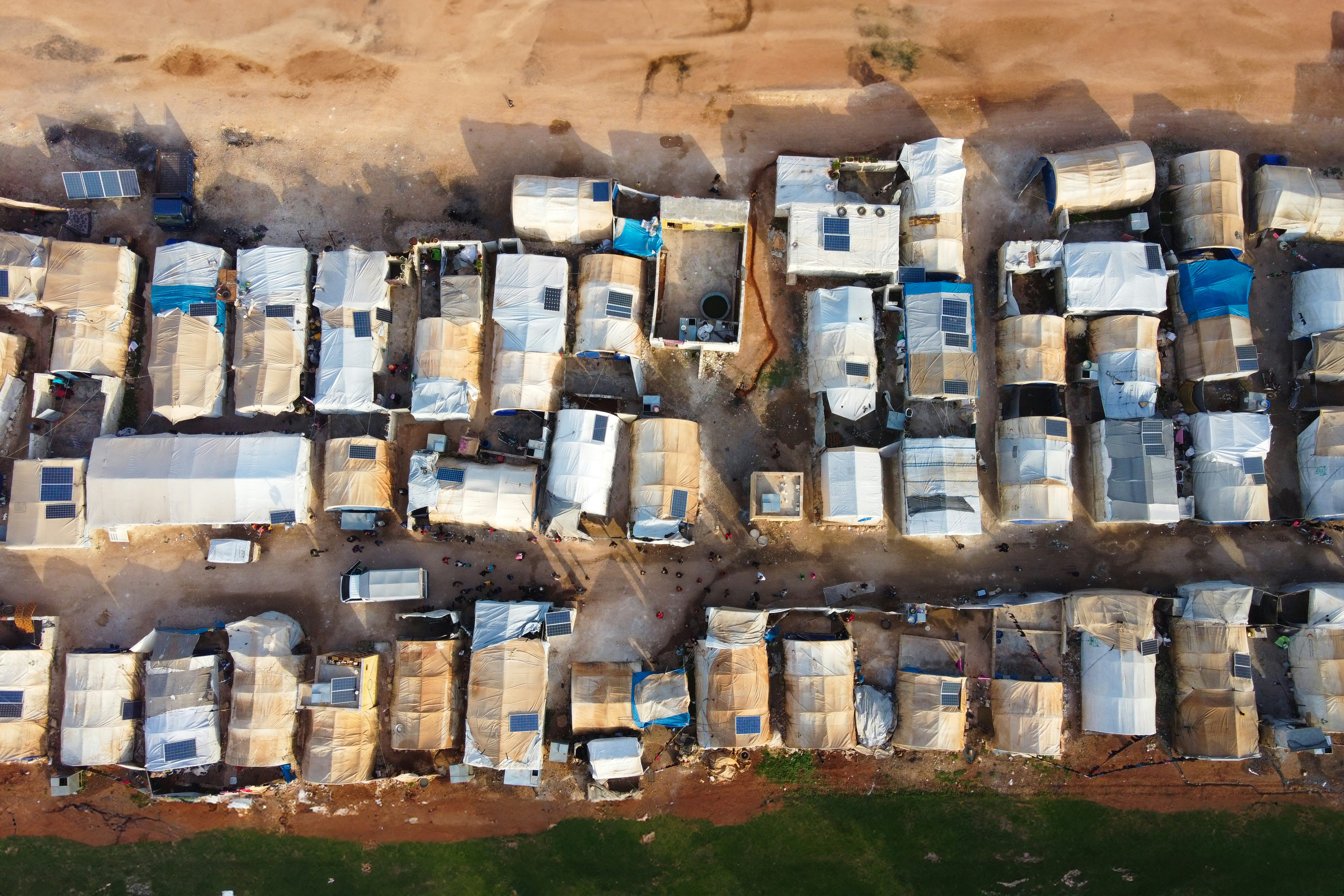
By the end of 2024, Nigeria hosted roughly 127 000 refugees and asylum seekers from about 41 different countries, the vast majority of whom live in communities rather than formal camps (UNHCR 2024). At the same time, the country was carrying the weight of its own internal crisis: an estimated 3.5 million internally displaced people, alongside efforts that helped some 50 000 IDPs and refugees return home during the year (UNHCR 2024). These numbers sit against a backdrop of serious economic strain, with inflation climbing to around 34% and a string of climate shocks (National Bureau of Statistics 2024). Severe flooding in the northeast alone affected more than 480 000 people in 2024, with tens of thousands hit in Borno, Adamawa and Yobe states (Reliefweb 2024). Despite all of this, humanitarian assessments have generally credited Nigeria with maintaining a favourable protection environment, including progress on the Global Compact on Refugees through steps like including refugees in social services, development planning and access to agricultural land.
The root of the northeastern crisis traces back to the Boko Haram insurgency, which escalated from 2013 onward (Foyou E. Viviane 2018). Even years into the crisis, getting an accurate headcount of the people on the move is one of the most difficult tasks the government is facing. Early estimates by humanitarian sources put displacement in the low hundreds of thousands, the UNHCR’s figures estimated a higher number and some local officials in affected states argued that the on-ground numbers were undercounted. Part of the difficulty is structural: the Nigerian government has had no official camp system for its internally displaced, so people scatter to shelter with relatives and host families, a reality that makes the true scale of displacement hard to see and even harder to service (André Clémentine 2019).
The People Nigeria Shelters
Nigeria’s refugee-hosting role has grown substantially over the past decade and a half. Where the country registered only a few thousand refugees and asylum-seekers in the early 2010s, more recent counts have run into the tens of thousands, with the large majority coming from Cameroon, with the smallest numbers coming from Niger and the Democratic Republic of Congo. Most ran away from violence and conflict at home, and a meaningful number reside in urban areas like Lagos and Abuja rather than dedicated settlements.
On paper, Nigerian law is law provides a relatively welcoming framework for refugees, granting them freedom of movement, access to the labour market, health coverage and schooling for their children on broadly equal terms with Nigerian citizens. In practice, however, refugees often face significant barriers to employment and healthcare access, even when they possess valid documentation. These challenges are partly attributed to limited awareness among local officials and community members of refugees’ legal rights and entitlements.
Human Trafficking: The darker Undercurrent
Displacement, poverty and weak rural economies have made Nigeria a significant source, transit and destination country for human trafficking. Women and girls have been largely affected, funnelled into sex trafficking and domestic servitude both within Nigeria and in destinations across Europe and the Middle East, while boys are more often into labour, begging or in conflict zones, recruited as child soldiers (Forced Migration Review 2024). The government’s anti-trafficking agency has logged thousands of cases and secured a significant number of convictions relative to the scale of the problem.
Nigeria’s migration reality is not as simple as you might expect; it is a country that is actively hosting people fleeing crises in neighbouring countries, while also having a large number of internally displaced populations and losing a large population of skilled workers to emigration.
Link to the Atlas: https://sihma.org.za/african-migration-statistics/country/ng
References
André Clémentine . 2019. Looking beyond Boko Haram in the Lake Chad region. September 12. https://www.internal-displacement.org/expert-analysis/looking-beyond-boko-haram-in-the-lake-chad-region/.
Forced Migration Review. 2024. Nigeria: human trafficking and migration. https://www.fmreview.org/nwogu/.
Foyou E. Viviane, Ngwafu Peter, Santoyo Maribe, Ortiz Andrea. 2018. The Boko Haram Insurgency and its Impact on Border Security, Trade and Economic Collaboration Between Nigeria and Cameroon: An Exploratory Study. January. January 2018 tí a ráyè sí. https://digitalscholarship.tsu.edu/cgi/viewcontent.cgi?article=1058&context=assr.
National Bureau of Statistics. 2024. CPI and Inflation Report June 2024. June . https://www.nigerianstat.gov.ng/elibrary/read/1241533.
Reliefweb . 2024. Nigeria: Floods. https://reliefweb.int/disaster/fl-2024-000159-nga.
Categories:
Tags:
- SIHMA Migration Atlas
- Urban Refugees Lagos Abuja
- Host Communities
- Global Compact On Refugees
- Skilled Labor Emigration
- Nigerian Diaspora
- Cross-border Migration
- Anti-trafficking Agencies
- Human Trafficking In Nigeria
- African Migration Statistics
- Borno State Flooding
- Lake Chad Displacement
- Boko Haram Insurgency
- Cameroonian Refugees
- Refugees In Nigeria
- UNHCR 2024 Nigeria
- IDPs In Nigeria
- Internally Displaced Persons
- Forced Displacement
- Nigeria Migration